

Book Appointment
Save the Natural Tooth
Modern, Precise TechniqueRotary instruments and microscope-assisted vision for accurate results.
Clinician with eyewear on shining the light towards viewer.
Dentist with eyewear on attentively working on a patient.
Gentle Today
Not What It Used to BeFar more comfortable than the procedure's reputation suggests.

Expert Care for a Healthier, More Confident Smile

Root canal treatment has come a long way from its fearsome reputation. Modern techniques, rotary instruments, microscope-assisted vision and high-quality numbing protocols mean a contemporary root canal is for most patients no more uncomfortable than a routine filling. The real value is what it saves: your natural tooth, your bite, and the long-term integrity of your smile.

At Denmark Hill Smiles, every root canal is led by Dr Jigna Joshi, our Principal Dentist - with the time, patience and precision the treatment deserves to be done properly.

Begin Your Journey   →
OUR LEGACY
50+ years1000+ smiles5.0 Google Rating

What is Root Canal Treatment?

Root canal treatment removes infected or inflamed tissue from inside a tooth that's been damaged by decay, trauma or repeated dental work. The space inside the tooth is carefully cleaned, disinfected, shaped and sealed with a precise filling material eliminating infection, relieving pain, and saving the natural tooth from extraction. Most cases are completed in one or two appointments, depending on complexity.
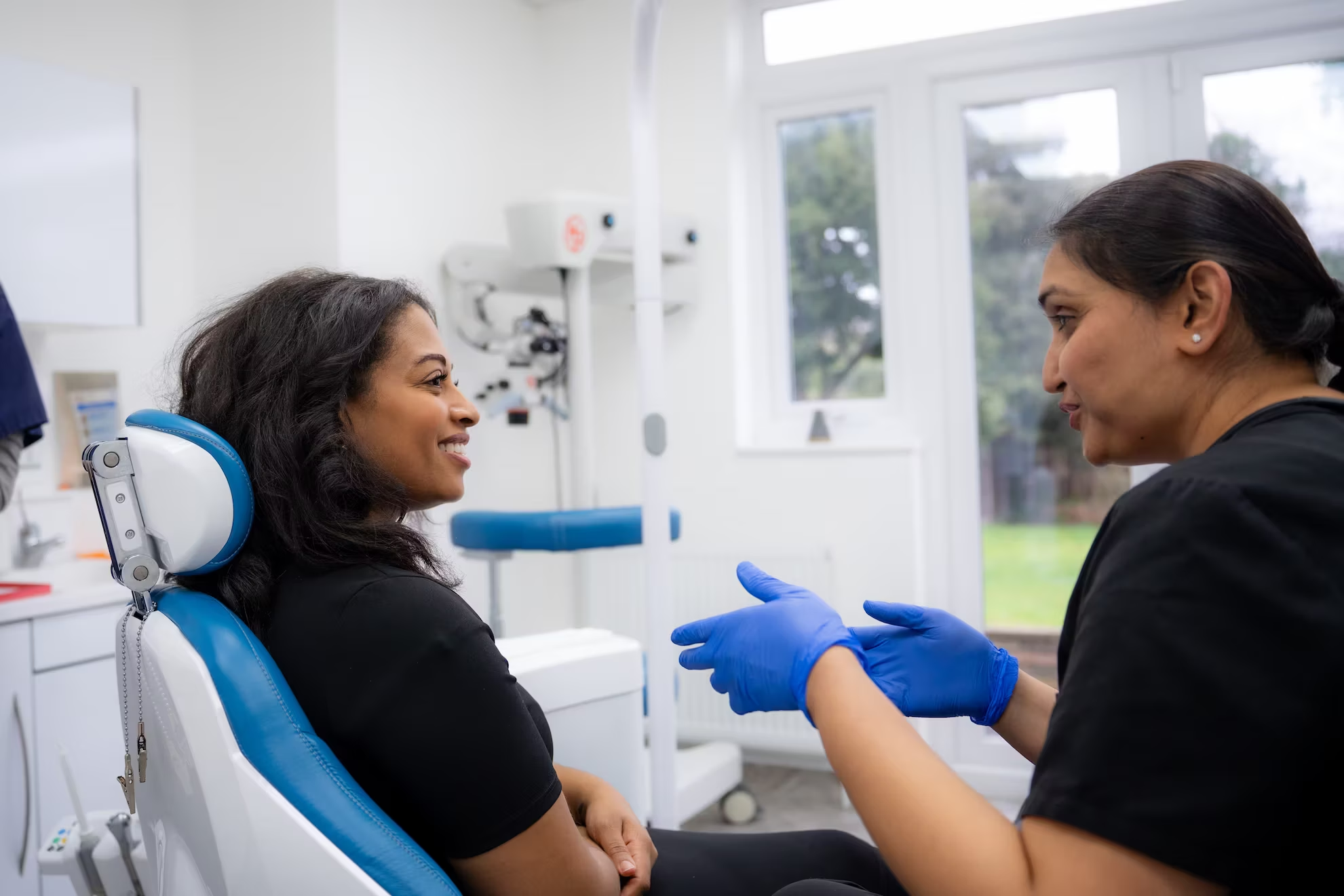
Dentist explaining procedure to a smiling patient.

Your Root Canal Journey

Root canal treatment at Denmark Hill Smiles begins with a careful diagnosis confirming exactly which tooth is affected, the extent of the infection, and whether root canal is genuinely the right answer (occasionally, extraction is the more sensible long-term choice). We'll take photographs and X-rays, examine the tooth's surroundings, and talk through the options with you in detail. Nothing happens until you understand the situation fully and feel confident about the plan.

What sets the experience apart is the time we take. Modern root canal treatment is a precision procedure and the quality of the result depends almost entirely on how meticulously each canal is cleaned, shaped and sealed. We use rotary instruments and microscope-assisted vision throughout, alongside thorough numbing protocols to keep you comfortable. Most cases are completed in one or two appointments. After treatment, the tooth typically needs a crown or onlay to restore full strength which we'll plan together at the same time.

Dentist smiling towards a patient.
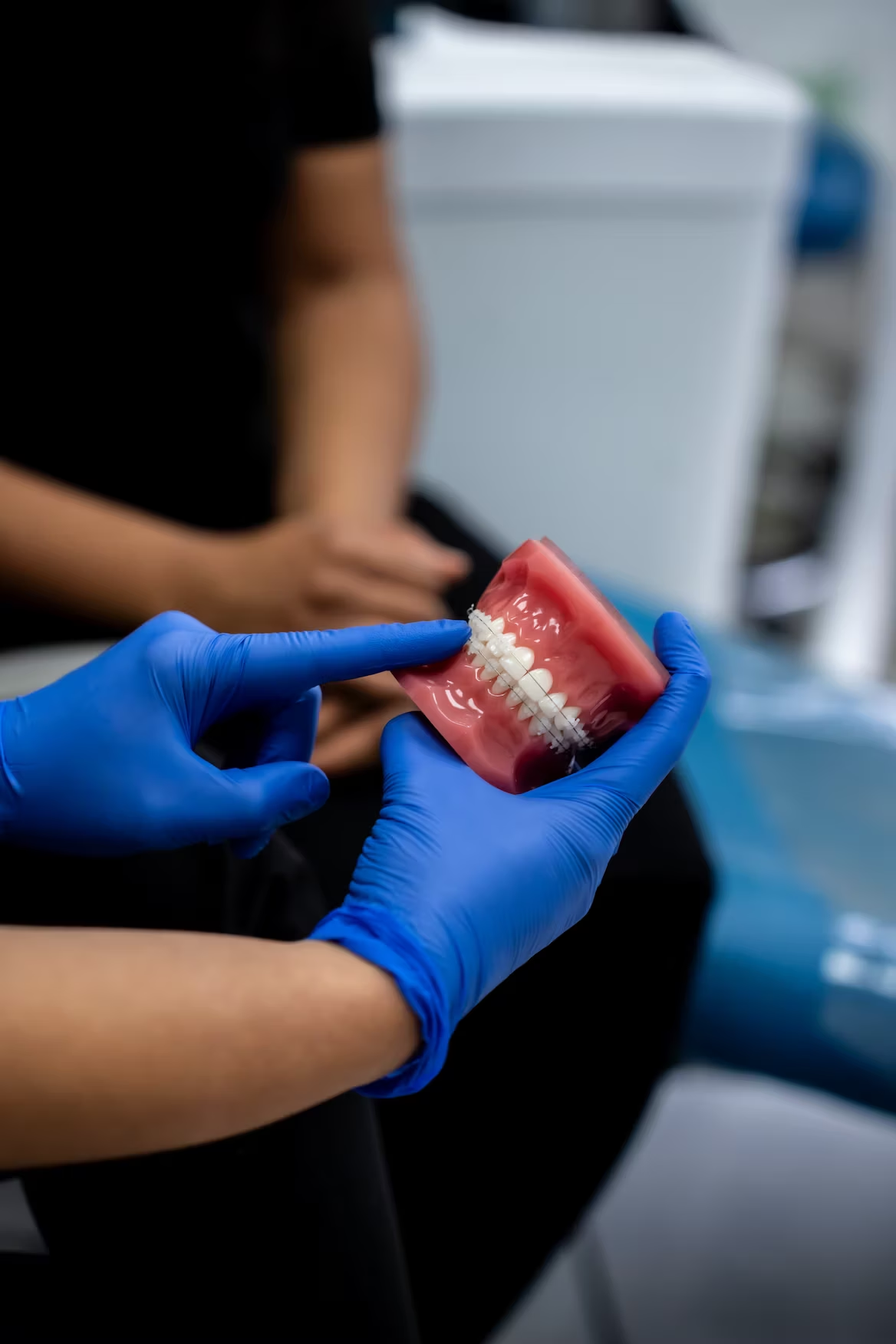
Gloved hands examining a model of the teeth.
Dentist preparing tools.
Step 1
Diagnosis & Plan

A careful examination, X-rays, and confirmation of the right treatment.

Step 2
Root Canal Treatment

Precision cleaning and sealing under local anaesthetic, in comfort.

Step 3
Final Restoration

Usually a crown to restore full strength to the tooth.

Frequently Asked Questions

Does root canal treatment actually hurt? arrow_forward_ios
Modern root canal treatment is significantly more comfortable than its reputation suggests. The procedure itself is carried out under thorough local anaesthetic — most patients describe it as no more uncomfortable than a routine filling. The pain people associate with root canals is almost always the pain of the infection beforehand, not the treatment itself. For more anxious patients, we offer sedation throughout.
How long will my tooth last after a root canal? arrow_forward_ios
A well-completed root canal, properly restored with a crown afterwards, can last decades — often a lifetime. Long-term success depends on three things: how thoroughly the infection was removed, the quality of the final restoration on top, and your ongoing oral hygiene. Regular check-ups let us monitor the tooth long-term and catch any issues early.
Why do I need a crown after a root canal? arrow_forward_ios
A tooth that's had a root canal becomes more brittle over time, because the internal blood supply has been removed. Without a crown or onlay to protect it, the tooth is significantly more likely to crack or fracture under normal biting forces — particularly back teeth, which take the most load. A crown restores full strength and protects the investment in the treatment.
Should I just have the tooth extracted instead? arrow_forward_ios
Sometimes — but usually not. Keeping your natural tooth is almost always preferable to extracting it: it preserves your bite, prevents the surrounding teeth from drifting, and avoids the need for a bridge or implant in the future. We'd only recommend extraction over root canal when the tooth is genuinely beyond saving — and we'll be honest with you if that's the case.
How do I know if I need a root canal? arrow_forward_ios
The most common signs are persistent toothache (especially when you bite down or apply pressure), prolonged sensitivity to hot or cold, swelling or tenderness around a specific tooth, a small bump or pimple on the gum near the tooth, or visible darkening of the tooth itself. Any of these warrants a careful examination — and the earlier we catch the issue, the more straightforward the treatment.