Book Appointment
Built to Last
Specialist-Led CarePlaced and restored by a GDC-registered Prosthodontist Specialist.
Smiling patient looking at the viewer.
Dentist with eyewear on attentively working on a patient.
Like Your Own
Look, Feel, FunctionDesigned to behave exactly like your natural teeth.

Expert Care for a Healthier, More Confident Smile

Dental implants are the most refined way to replace missing teeth in modern dentistry titanium posts placed precisely into the jawbone, then restored with a bespoke crown, bridge or full arch to match your natural teeth exactly. Done well, they look, feel and function like the originals.

At Denmark Hill Smiles, every implant case is placed and restored by Dr Wassim Chawich, our in-house Prosthodontist Specialist. With over three decades of clinical experience and a quiet reputation in South London for complex restorative work, his approach is meticulous, unhurried, and built around long-term outcomes.

Begin Your Journey   →
TRUSTED BY

What are Dental Implants?

Dental implants are small titanium posts placed surgically into your jawbone, where they fuse with the bone over three to six months to form a permanent foundation. Once integrated, the implant supports a custom-made crown, bridge or full arch restoring the appearance, function and feel of your natural teeth. Unlike dentures, implants don't move; unlike bridges, they don't rely on neighbouring teeth for support.
Dentist explaining procedure to a smiling patient.

Your Dental Implants Journey

Dental implant treatment at Denmark Hill Smiles is a multi-stage process, carefully planned around your specific anatomy, your existing dental work, and the outcome you're after. Every case begins with a detailed consultation, a 3D CBCT scan of your jaw, and a clear treatment plan that maps every stage from initial placement through to final restoration. We'll explain exactly what's involved, how long each stage takes, and what to expect at every appointment.

What sets the experience apart is the level of clinical expertise behind every case. Implant placement is led by Dr Wassim Chawich, a GDC-registered Prosthodontist Specialist with more than three decades of complex restorative work behind him. Sedation is available throughout for patients who'd prefer to be fully at ease. Most cases take three to six months from initial placement to final crown though some can be completed faster, depending on bone quality and the type of restoration.
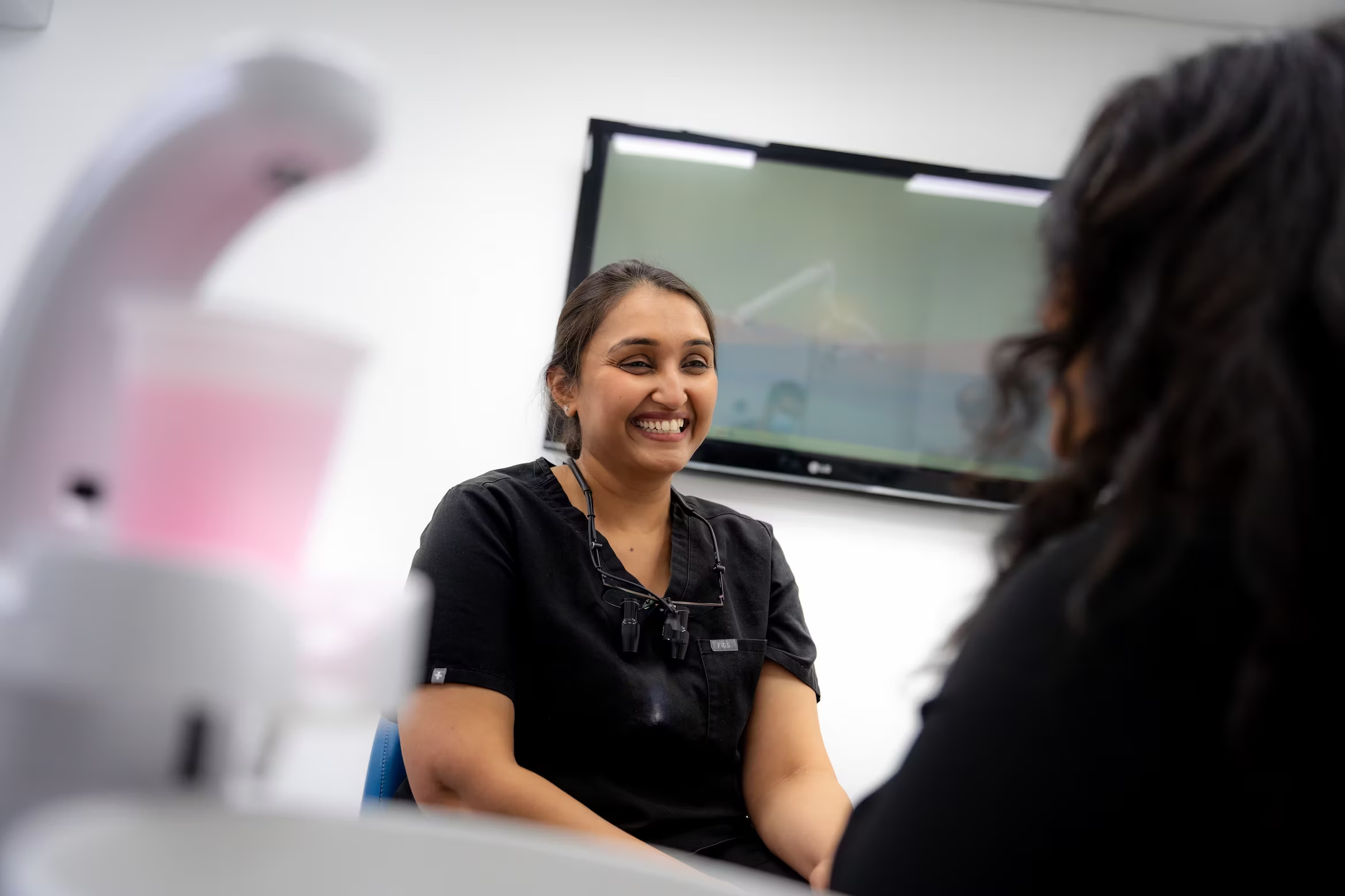
Dentist smiling towards a patient.
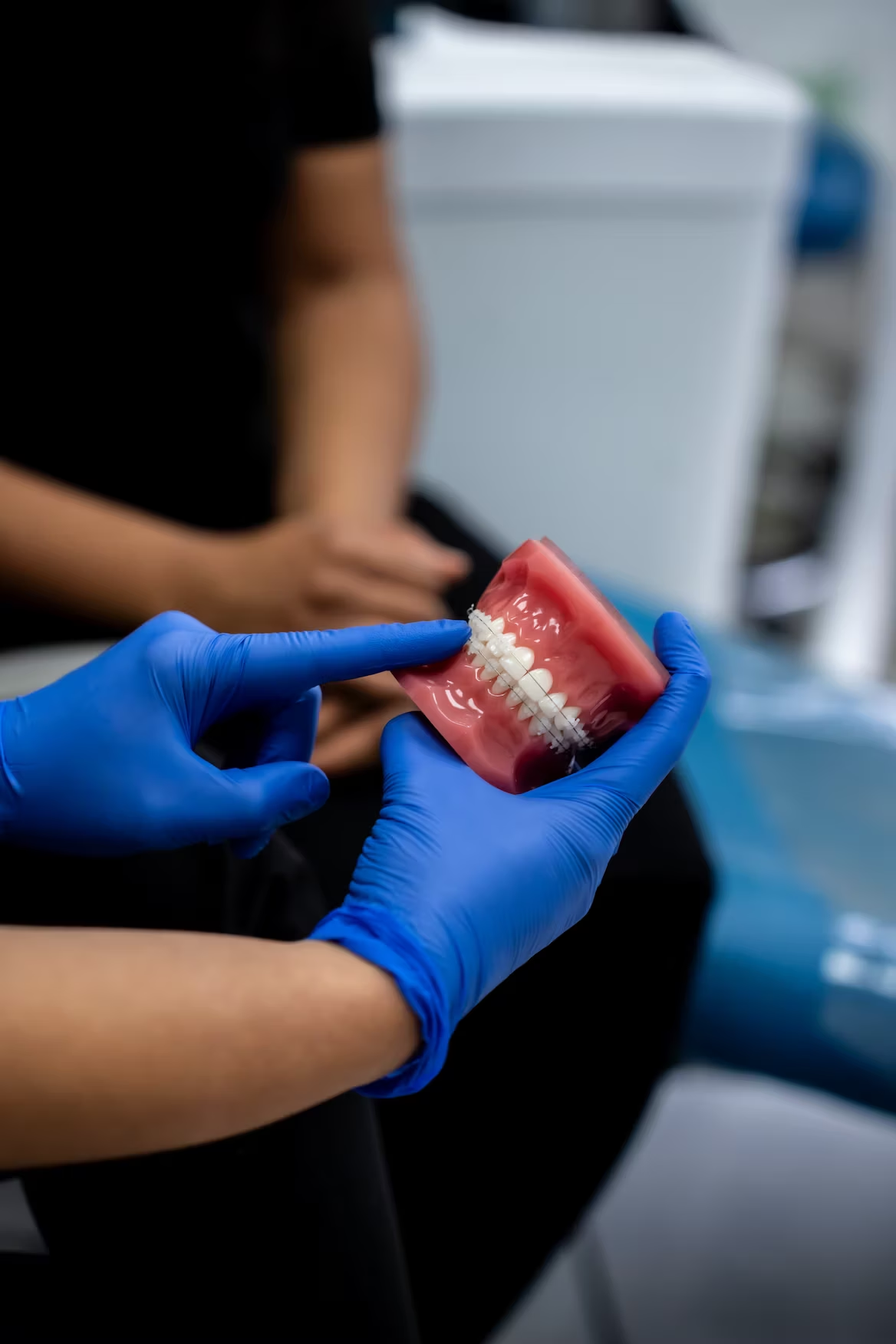
Gloved hands examining a model of the teeth.
Dentist preparing tools.
Step 1
Specialist Consultation

A full assessment, 3D CBCT scan, and a bespoke treatment plan.

Step 2
Implant Placement

Your titanium implant placed precisely, under local or sedation.

Step 3
Crown & Restoration

Your bespoke crown fitted once healing is complete.

Frequently Asked Questions

How long do crowns and bridges actually last? arrow_forward_ios
A well-made crown should last fifteen years on average — often longer with careful care. Bridges have a similar lifespan, with the main consideration being the health of the supporting teeth at either end. The biggest factors are your daily hygiene routine, regular check-ups to catch issues early, and avoiding habits like nighttime grinding (we'll recommend a nightguard if needed). Replacement isn't a sign of failure — it's natural maintenance over the long term.
Will it look the same as my natural teeth? arrow_forward_ios
With modern ceramic materials and a skilled laboratory, yes. A well-made crown or bridge should be indistinguishable from the natural teeth around it — same shade, same translucency, same surface texture. Dr Wassim's specialist training in prosthodontics is precisely about getting these details right, and we work with master ceramists who specialise in lifelike results. You'll see the shade and shape options before any restoration is made.
What material is best for me? arrow_forward_ios
It depends entirely on the position of the tooth, the function it needs to perform, and your aesthetic priorities. All-ceramic (e.max) crowns offer the most natural-looking results for front teeth. Zirconia is extraordinarily strong and ideal for back teeth that take heavy biting forces. Porcelain-fused-to-metal sits between the two — strong and good-looking, though slightly less natural than pure ceramic. We'll talk through the options at your consultation and recommend what fits your case.
Will the procedure hurt? arrow_forward_ios
Crown and bridge preparation is carried out under local anaesthetic, so you won't feel pain during the appointment itself. Some mild sensitivity in the days following preparation is normal — particularly if the tooth was already inflamed — and usually settles within a week. For more anxious patients, we offer sedation throughout. Most patients describe the appointment as no more involved than a routine filling.
What's the difference between a crown and a veneer? arrow_forward_ios
A crown covers the entire tooth — top, sides, and biting surface — and is used when the tooth itself is damaged, decayed or weakened. A veneer covers only the front face of the tooth, and is primarily a cosmetic treatment for otherwise healthy teeth. The two often work together: a damaged tooth might need a crown, while the teeth either side get veneers — all designed in tandem to match.