

Book Appointment
Tooth-Coloured
Modern Composite MaterialsPremium tooth-coloured resin that strengthens the tooth.
Dentists working on patient.
Dentist with eyewear on attentively working on a patient.
Virtually Invisible
Seamless FinishShaded and polished to blend with surrounding enamel.

Expert Care for a Healthier, More Confident Smile

Modern fillings have come a long way from the silver amalgam of decades past. Today's composite restorations are tooth-coloured, durable, and bonded into the tooth itself- strengthening rather than weakening it, while blending invisibly with the surrounding enamel.

At Denmark Hill Smiles, every restoration is placed with the same precision and attention to detail you'd expect from a far more involved treatment. Led by Dr Jigna Joshi, our Principal Dentist, the goal is always the same: a restoration that lasts for years, and looks like it isn't there.

Begin Your Journey   →
OUR LEGACY
50+ years1000+ smiles5.0 Google Rating

What are Composite Restorations?

Composite restorations - commonly known as white or tooth-coloured fillings are made from a medical-grade resin that bonds directly to the tooth structure. Used to repair cavities, small chips and worn edges, they're placed in layers, hardened with a specialist light, and polished to match the natural lustre of enamel. Unlike older silver amalgam fillings, composite restorations strengthen the tooth, contain no mercury, and remain virtually invisible in your smile.

Dentist explaining procedure to a smiling patient.

Your Composite Restorations Journey

Composite restorations at Denmark Hill Smiles are treated as a foundation of restorative dentistry small in scale, but enormous in importance to the long-term health of your teeth. Every appointment begins with a careful assessment: not just of the cavity itself, but of the surrounding teeth, your bite, and the wider context of your oral health. We'll discuss exactly what's involved, what materials we'll use, and what alternatives exist before any treatment begins.

What sets the experience apart is the time we take. Modern composite restorations are placed in carefully built-up layers each one shaped, cured and sculpted before the next is added to recreate the structure and contour of the natural tooth exactly. The final result is shaded to match your existing teeth, polished to mimic enamel, and finished to a standard that should last a decade or more. Most restorations are completed in a single appointment, comfortably and without rush.

Dentist smiling towards a patient.
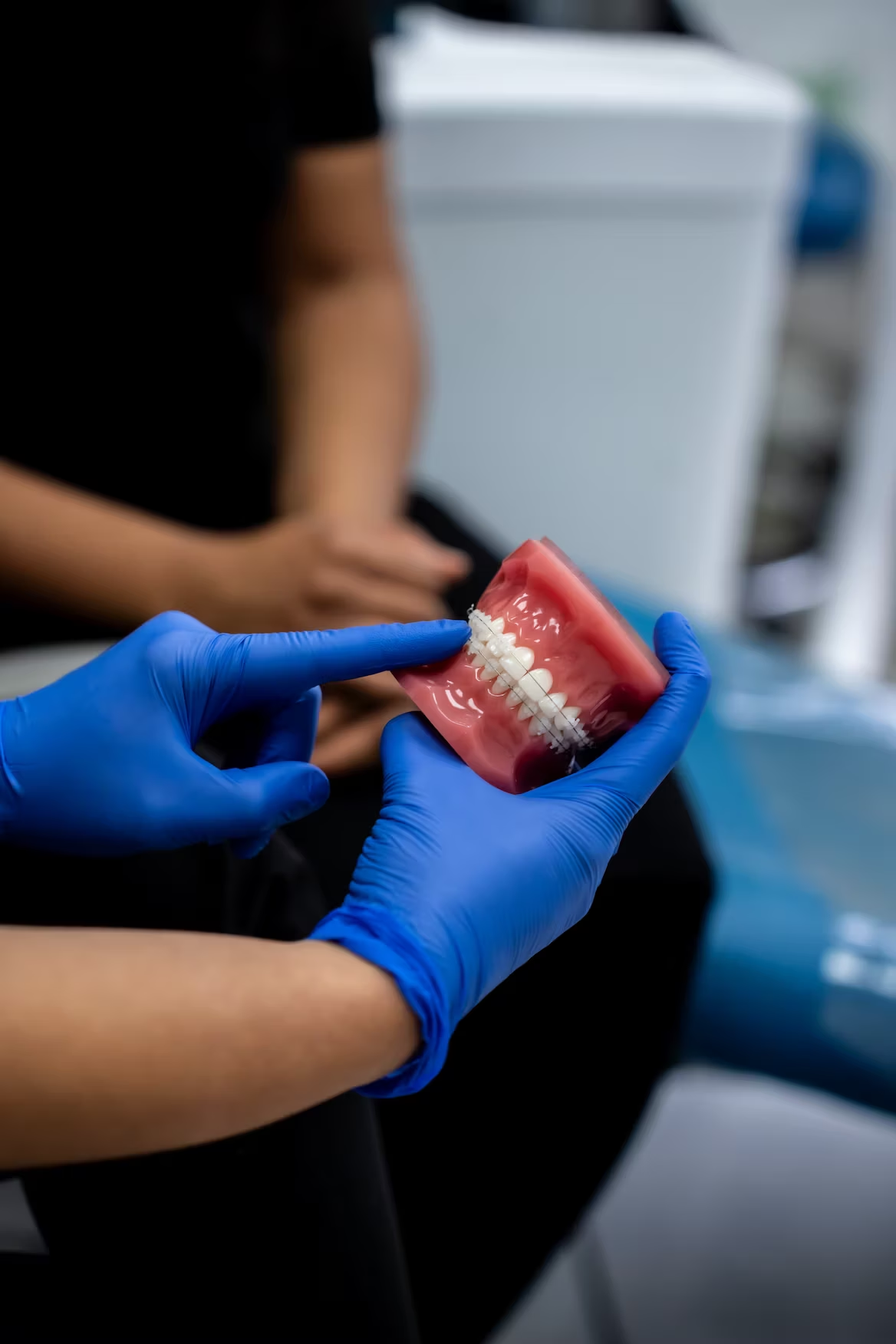
Gloved hands examining a model of the teeth.
Dentist preparing tools.
Step 1
Examination & Diagnosis

A careful assessment of the affected tooth and surrounding teeth.

Step 2
Preparation

Gentle removal of decay under local anaesthetic, with full comfort.

Step 3
Restoration & Finish

Composite layered, shaped and polished to a natural finish.

Frequently Asked Questions

How long do composite fillings actually last? arrow_forward_ios
A well-placed composite restoration typically lasts seven to ten years, often longer with good oral hygiene and regular check-ups. The lifespan depends on the size of the restoration (larger ones carry more bite force and wear faster), the position of the tooth, and your daily habits — grinding, very acidic diets and poor hygiene all shorten lifespan. Small repairs to chipped or worn composite can usually be touched up in a single visit, rather than redoing the entire restoration.
Should I replace my old silver amalgam fillings? arrow_forward_ios
Not necessarily. Sound, well-sealed amalgam fillings can stay in place for decades and don't generally need replacing for cosmetic reasons alone. We'll only recommend replacement if there's clinical evidence of cracks, leakage, or decay underneath — or if you specifically want them swapped for cosmetic reasons. If you do choose to replace them, we use safe removal protocols to protect you throughout the process.
Will my tooth be sensitive after a filling? arrow_forward_ios
Some sensitivity in the first few days after a composite restoration is completely normal — particularly with hot, cold or sweet foods. It usually settles within a week as the tooth adjusts. Persistent or sharp sensitivity beyond two weeks is worth flagging to us, as it can occasionally indicate that the restoration needs minor adjustment. We'll always check in at your next appointment to make sure everything has settled properly.
What happens if the cavity is too big for a filling? arrow_forward_ios
If too much tooth structure has been lost, a standard composite restoration won't be strong enough to hold up over time — and we'd recommend an inlay, onlay or crown instead, depending on how much tooth is left. We'd never proceed with a treatment we don't think will last. At your consultation, we'll explain exactly what we're seeing, what the options are, and what each option costs.
Will the filling be visible when I smile? arrow_forward_ios
Almost certainly not. Modern composite materials are colour-matched to your existing teeth and polished to mimic the natural lustre of enamel — so even on a front tooth, a well-placed restoration should be invisible in normal conversation. If you have older silver fillings that you'd prefer hidden, we can replace them with composite at a routine visit.