
Book Appointment
Same-Day Results
Reversible & RefinedNo drilling, no preparation, no permanent change to your tooth.
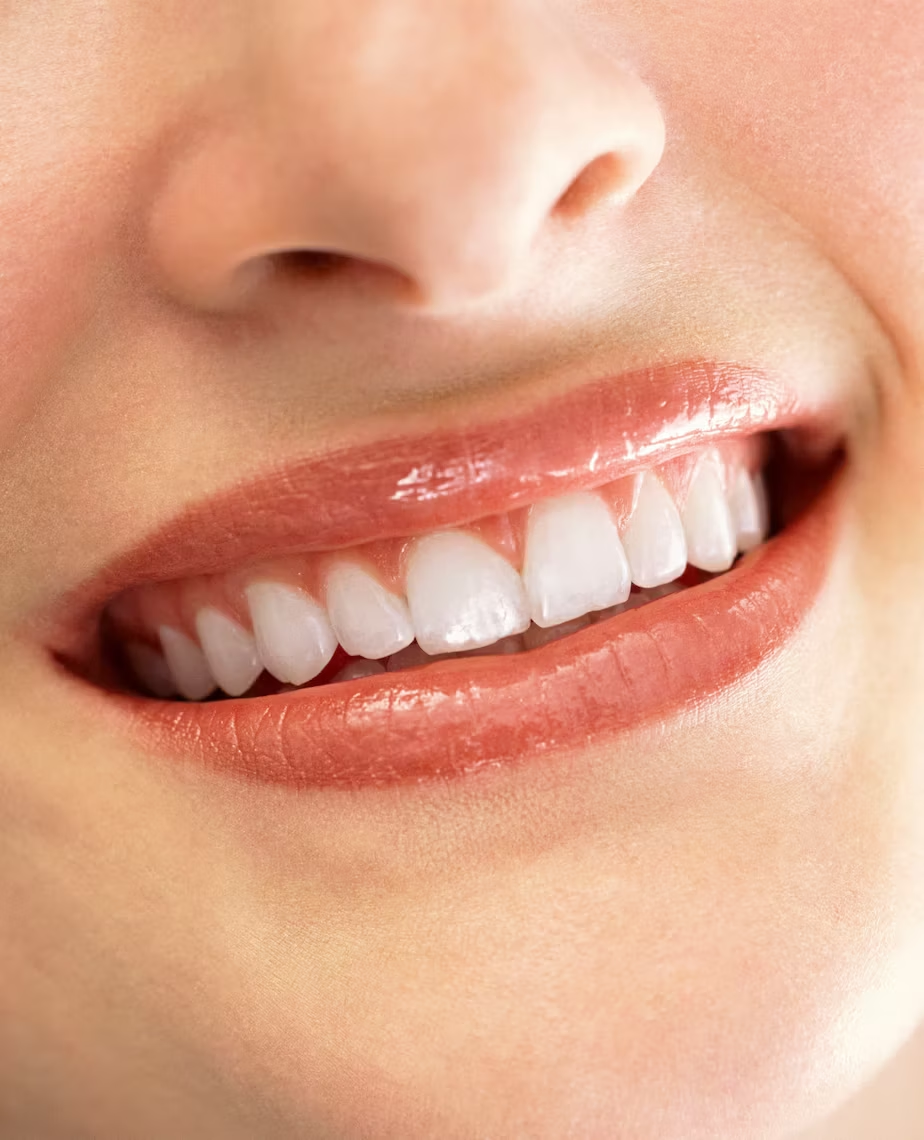
Close-up of female patient smiling.
Dentist with eyewear on attentively working on a patient.
Considered Detail
Hand-Sculpted FinishEach layer placed and shaped by your clinician's hand.

Expert Care for a Healthier, More Confident Smile

Composite bonding is one of the most refined techniques in modern cosmetic dentistry - a way to reshape, refine and rebuild teeth without drilling, preparation or laboratory work. Tooth-coloured resin is applied directly to your existing teeth and sculpted by hand, then polished to a natural, exceptional finish.

At Denmark Hill Smiles, every bonding case is planned in detail with photographs, smile measurements and a clear conversation about the result you're after before the first layer of composite is ever placed.

Begin Your Journey   →
OUR LEGACY
50+ years1000+ smiles5.0 Google Rating

What is Composite Bonding?

Composite bonding uses tooth-coloured resin to reshape, refine or rebuild a tooth. Layered onto your existing tooth and sculpted by hand, the resin is cured under a specialist light, then polished to mimic the natural lustre of enamel. There's no drilling, no preparation, and no permanent change to your tooth making it one of the most refined and reversible cosmetic treatments in modern dentistry.
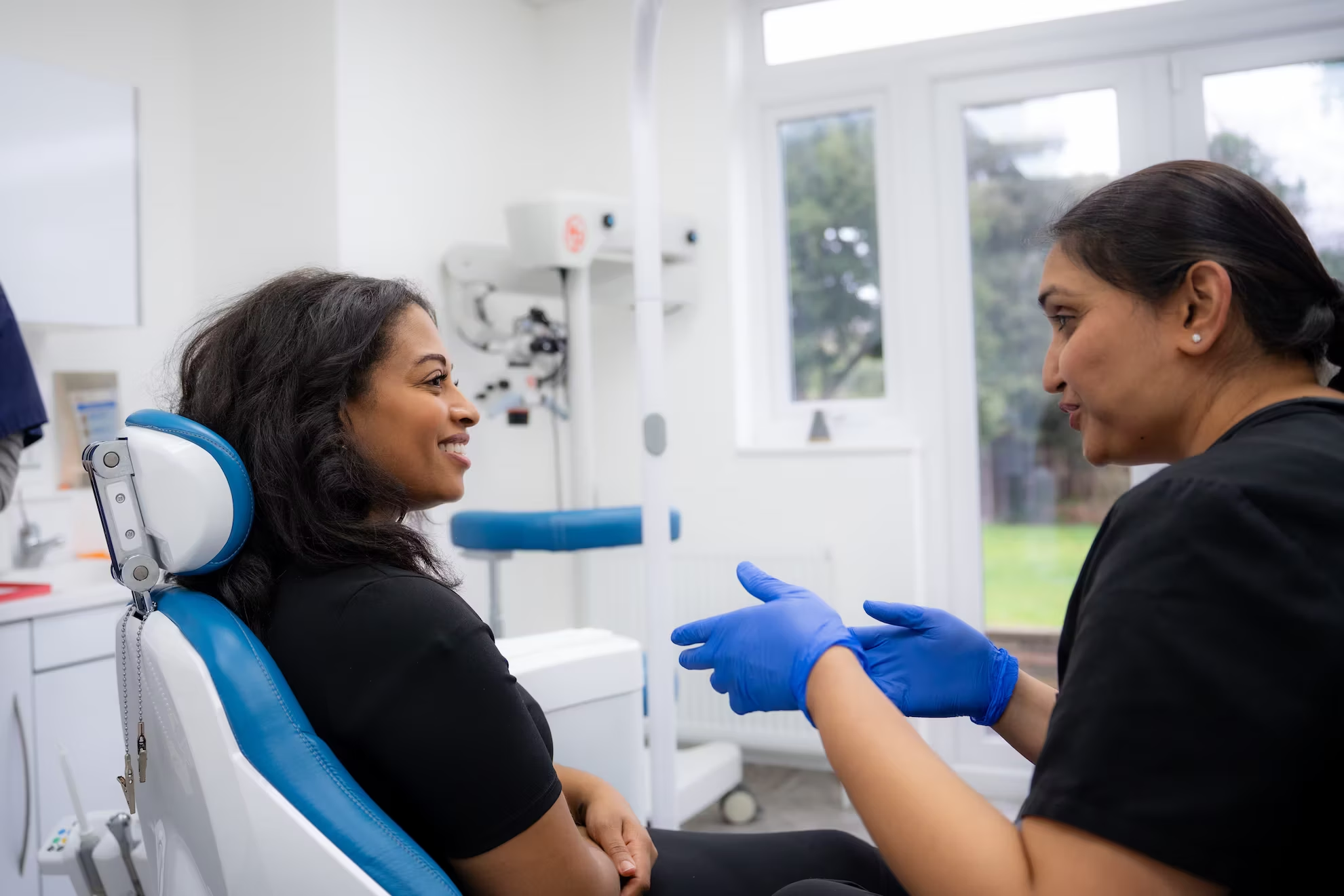
Dentist explaining procedure to a smiling patient.

Your Composite Bonding Journey

Composite bonding at Denmark Hill Smiles is treated as a craft. Every case begins with a detailed conversation about your smile what you'd like to change, what to keep, and how subtle or transformative the result should feel. Photographs, smile measurements and digital mock-ups help us plan in detail before any composite is placed. Most bonding cases are completed in a single appointment, with longer transformations involving multiple teeth scheduled across one or two visits.

What sets the experience apart is the time we take. Composite bonding is a hand-sculpted treatment, layered and shaped one tooth at a time and the difference between a good result and an exceptional one comes down entirely to that patience. Each tooth is shaped, polished and finished with the same attention to detail you'd expect from a far more invasive treatment. The result: a refined, natural-looking smile that feels effortlessly your own.

Dentist smiling towards a patient.
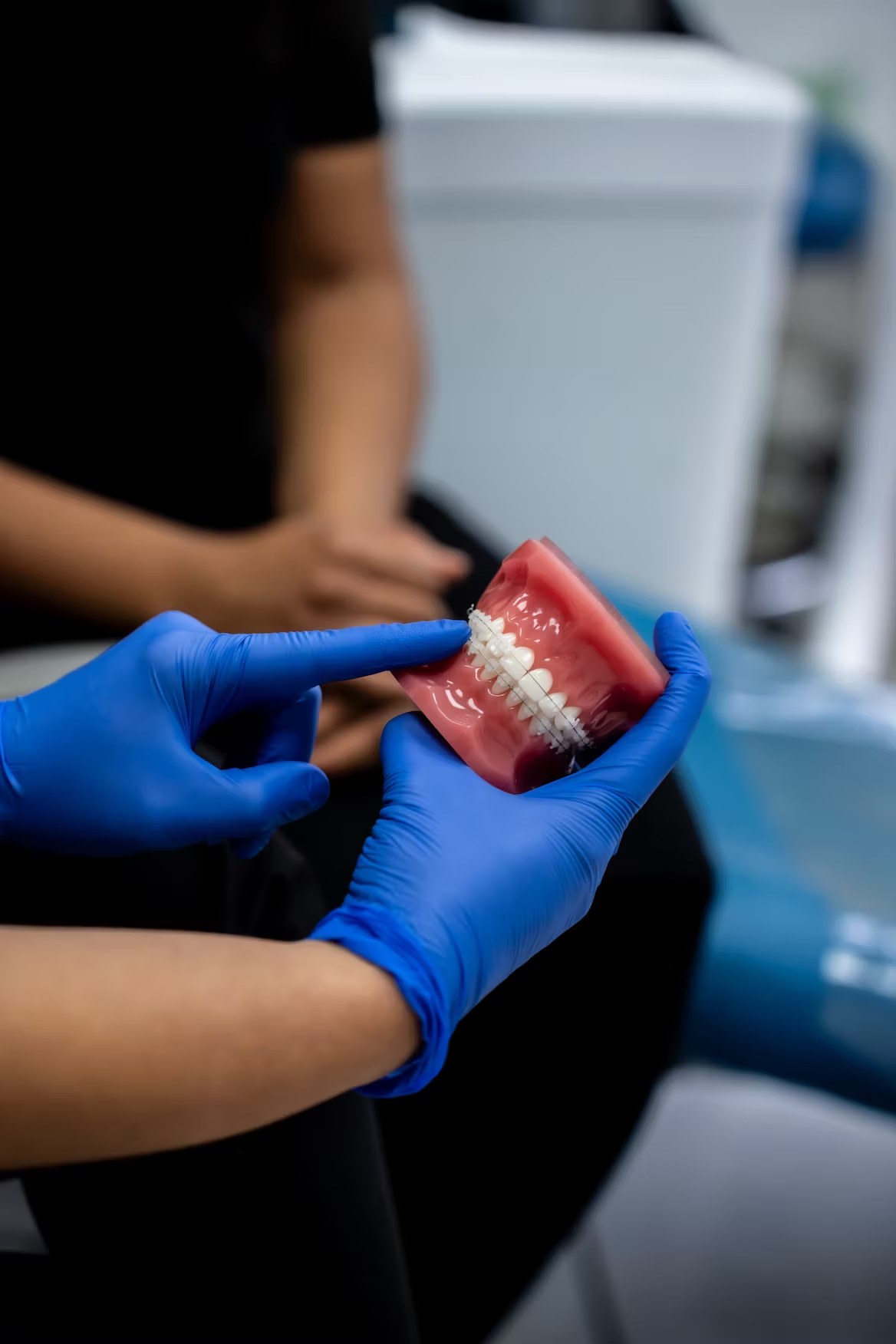
Gloved hands examining a model of the teeth.
Dentist preparing tools.
Step 1
Smile Consultation

A relaxed conversation about the smile you'd like.

Step 2
Shade & Shape Plan

Tooth shades matched, shapes mapped, a clear preview agreed.

Step 3
Bonding Appointment

Resin applied, hand-sculpted and polished - usually in one visit.

Frequently Asked Questions

Will my veneers look natural, or obviously fake? arrow_forward_ios
It depends almost entirely on three things: the ceramist's craftsmanship, the shade and translucency of the porcelain, and how the veneers are shaped to suit your face. Done well, porcelain veneers catch the light the way natural enamel does — with the subtle imperfections and translucency that make a tooth look real. Done poorly, they look uniform, flat and obviously dental. At Denmark Hill Smiles, we work with master ceramists who specialise in lifelike results.
How much of my natural tooth is removed? arrow_forward_ios
A very small amount — usually around 0.3 to 0.5mm of the front surface, roughly the thickness of a fingernail. This creates space for the veneer to sit flush against your gum line rather than bulging forward. The preparation is conservative, but it isn't reversible — which is why we plan every case in detail before any tooth surface is touched.
How long do porcelain veneers actually last? arrow_forward_ios
Fifteen to twenty years on average, often longer with careful care. Porcelain doesn't yellow, dull or absorb stains the way composite does, and the bond to your tooth is exceptionally durable. The most common reason for eventual replacement is the natural ageing of the underlying tooth or gum line over time, rather than the porcelain itself.
What happens if a veneer chips or comes off? arrow_forward_ios
Porcelain veneers are remarkably strong, but they can chip if you bite into something unexpectedly hard — ice cubes, bones, hard-shelled nuts. Small chips can often be polished or repaired without replacing the veneer; larger damage usually means a single replacement, made to match the rest of your smile. Twelve months of aftercare is included so you're covered for any early issues.
How is porcelain different from composite bonding? arrow_forward_ios
Composite bonding is sculpted by hand directly onto your existing tooth — quicker, cheaper, reversible, but with a shorter lifespan. Porcelain veneers are custom-made in a specialist laboratory and bonded to a prepared tooth — longer-lasting, exceptionally stain-resistant, and the highest-quality cosmetic finish available, but not reversible. We'll talk through which suits your smile, your budget and your timeline at your consultation.